Tower Dash

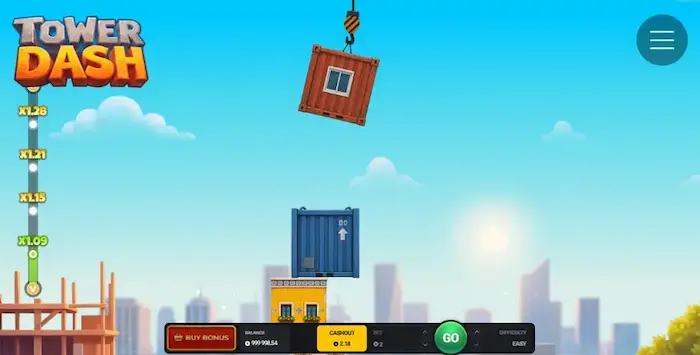
Forget reels, forget symbols — Tower Dash asks you to build upward instead. It's a step-based crash game from Astriona Games where each floor you add to a tower pushes a multiplier higher, and the whole thing hinges on knowing when to grab your winnings before it all comes crashing down. It's landed on plenty of online casino libraries next to names like Sweet Bonanza and Gates of Olympus, but the gameplay itself couldn't be more different.
The appeal here is pretty simple to understand once you've played a round or two. Every second you leave your bet running is a second where the reward grows but so does the risk, and that constant back-and-forth is what keeps players glued to the screen far more than a passive reel spin ever could. It scratches an itch that a lot of standard slot machines don't — the itch to actually make a decision mid-round rather than just watching numbers land.
Quick Specs
| Feature | Details |
|---|---|
| RTP | Roughly 97–98%, depending on the operator |
| Volatility | High, shaped further by the risk setting you choose |
| Max win | No universally confirmed figure — always check the operator's own rules |
| Format | Step-based crash game, no reels or paylines involved |
| Provider | Astriona Games |
| Release | 2026 |
| Theme | Construction sites and rising skylines |
| Mobile compatible | Yes |
What Exactly Is Tower Dash?
Tower Dash swaps the usual grid of symbols for a single climbing structure. Every round, a cartoon tower gets built one floor at a time, and each successful floor bumps the multiplier attached to your bet. The game comes from Astriona Games, a studio that's clearly betting on the crash-and-climb genre rather than trying to compete in the crowded reel-slot space.
The art style leans into a construction theme, complete with a builder character who reacts as the tower rises. It landed during a period where crash-style games were already having a moment, following in the footsteps of road-crossing and plane-launching titles that came before it. For players used to traditional five-reel machines, this is a genuinely different pace — shorter rounds, faster decisions, and a lot less waiting around for animations to finish.
How the Tower Dash Format Actually Works
There's nothing here resembling a payline or a symbol grid, so the usual slot vocabulary doesn't really apply. Instead, you place your bet, pick a risk setting, and watch the tower start stacking floors automatically. The round wraps up in one of two ways — you cash out and keep whatever multiplier you'd reached, or the tower gives way and the stake disappears.
There's no wild symbol substituting for others and no scatter triggering a side bonus, because the format simply isn't built around those ideas. What functions as the game's main "feature" is the risk selector itself, which behaves a bit like adjustable volatility baked directly into the round rather than sitting off to the side as a bonus mechanic.
The multiplier ticks upward with each floor, and the exact point where the tower will eventually give way is set by a random number generator before the round even starts. That means no clever timing trick during the round itself changes anything — the only genuine choice is deciding when enough is enough.
Standout Features Worth Knowing
Adjustable Risk Setting
Choosing between low, medium, or high risk changes the entire personality of a round. Lower settings favour steady, modest multipliers with fewer surprises, while higher settings chase bigger numbers at the cost of far more frequent early collapses.
Manual Cash-Out Control
You decide exactly when to lock in a win, with no fixed floor count required first. That freedom is part of what separates this format from a slot's fixed payline structure — here, the decision is entirely yours to make in real time.
Step-by-Step Climb
Rather than a single smooth curve like some crash games use, Tower Dash breaks progress into individual floors. Each one acts as its own checkpoint, giving the whole experience a more deliberate rhythm than watching one continuous number tick upward.
Fairness Verification Option
Some versions of the game let players check a round's outcome after it finishes through a provably fair system. It won't tilt the odds your way, but it does mean the process behind each collapse point can be checked rather than trusted blindly.
Consistent Round Structure
There's no bonus-buy option pushing players to spend extra for a shot at bigger multipliers. Every round starts from the same baseline regardless of bet size, which keeps the format fair across different budgets.
Volatility and RTP, Explained Simply
Tower Dash sits comfortably in high-volatility territory, and picking a higher risk setting only leans further into that. High volatility, in plain terms, means fewer frequent wins but a shot at genuinely large multipliers when things go your way — it's a trade-off, not a shortcut to better odds.
RTP typically runs around 97–98%, which stacks up nicely against the broader online slots market, where standard titles often sit closer to 94–96%. That difference matters more than it might seem, especially across a long session where small percentage gaps compound.
Given how sharp the swings can be, playing low or medium risk tends to suit longer sessions where steady play matters more than chasing one big result. High risk works better as a short, deliberate burst rather than a default setting for extended play.
What Winning Actually Looks Like
Since there's no symbol matching involved, winning in Tower Dash comes down entirely to the multiplier showing when you choose to cash out. Stake 20 units and pull out at a 4x multiplier, and you walk away with 80 units — simple math, but only if the tower hasn't already given way by that point.
There's no paytable listing symbol combinations because none exist here. What replaces it is the shape of the climb itself: early floors typically offer smaller multipliers, somewhere in the 1.5x to 3x range, while later floors can theoretically stretch into much larger territory depending on the risk level chosen. Every floor is its own independent event, with zero connection to whatever happened in the round before it.
Free Spins and Bonus Rounds — Or Lack Thereof
If you're expecting a scatter-triggered bonus screen, Tower Dash won't give you one. There's no free spins mechanic in the way a traditional slot handles it, because the entire game already runs on a single continuous decision loop from the very first floor.
What replaces a bonus round is baked into the base game itself. The risk selector and the climbing multiplier do the job that a separate feature round might normally handle elsewhere, meaning there's no waiting around for a trigger symbol to appear before the "real" excitement starts.
Multiplier ceilings vary depending on which risk setting is active and which operator is running the game, so there's no single number that applies everywhere. Checking the specific rules on whichever platform you're using is the only reliable way to know the real ceiling for that version.
Playing on a Phone or Tablet
Tower Dash was clearly built with mobile play in mind, which tracks given how short and fast each round tends to be. The layout adjusts cleanly to smaller screens without cramming buttons together or shrinking text to the point of frustration.
Most platforms run the game directly through a mobile browser rather than requiring a dedicated app. That keeps things lightweight — no download, no storage taken up, no update notifications interrupting a session.
The controls themselves stay minimal: place a bet, watch the floors stack, tap once to cash out. Because there's no complicated paytable to reference mid-round, the whole thing translates to a small screen more comfortably than a dense five-reel slot ever could.
Smart Ways to Approach the Game
Bankroll discipline counts for a lot here, mostly because rounds move so fast that it's easy to play more of them than planned without noticing. Keeping individual bets around one to three per cent of a session's total bankroll gives enough cushion to survive a string of early collapses without running dry. On a 100-unit session, that means bets somewhere between 1 and 3 units per round.
No betting pattern beats the underlying math, and that includes doubling stakes after a loss in hopes of recovering it quickly — a method that can spiral fast in a high-volatility game like this one. A steadier habit is picking a target multiplier ahead of time, maybe 2x or 3x, and sticking to cashing out there consistently instead of getting tempted to push further once you're already ahead.
Recognising when to stop matters more than any specific betting method. Setting a firm loss limit before starting, somewhere around 20 to 30 per cent of the session bankroll, gives a clear signal for when to walk away rather than letting a bad run drag on.
How Tower Dash Fits Into Casino Bonuses
Because this isn't a traditional slot, it doesn't always slot neatly into welcome packages built around free spins. Some casinos do include crash-style titles like this one under broader bonus eligibility, but dedicated free spins offers usually stay reserved for reel-based games instead.
Where Tower Dash tends to show up more often is inside deposit match bonuses or general cashback promotions that apply across an entire game library. It's worth double-checking bonus terms directly, since plenty of operators exclude high-volatility crash titles from wagering contributions altogether.
Wagering requirements are worth understanding properly before assuming any bonus applies. A 25x or 30x wagering requirement means playing through that multiple of the bonus amount before withdrawing anything, and high-volatility games can make that a bumpier ride than lower-variance titles would.
How It Stacks Up Against Similar Titles
Aviator remains the most recognisable name in the crash-game space, running a similar RTP range to Tower Dash. The key difference is presentation — Aviator uses one continuous curve with a plane visual and shows other players' live bets, while Tower Dash breaks everything into discrete floors and keeps the experience more personal.
Sweet Bonanza sits at the opposite end entirely, running as a proper reel-based slot with cluster pays and a genuine scatter-triggered free spins round. Anyone wanting that classic symbol-matching feel should look toward titles like this one rather than Tower Dash, which was never designed around that structure.
Gates of Olympus offers another reel-based contrast, built on a tumbling mechanic with random multipliers appearing during its bonus round. Both of those titles run fully automated once a spin starts, whereas Tower Dash keeps handing the player a live decision every few seconds — that's really the defining difference across the board.
Weighing the Pros and Cons
Pros
- RTP typically landing around 97–98%, competitive within the crash-game space
- Adjustable risk settings that give real control over each session's pace
- Quick rounds ideal for players who want short bursts rather than long sessions
- No bonus-buy pressure, keeping every round on equal footing
- Clean mobile layout that avoids feeling cramped on smaller screens
Cons
- No free spins or bonus round in the traditional sense
- High volatility that can punish loose bankroll habits quickly
- Inconsistent maximum win figures across different operators
- A newer provider with less of a long-term track record to lean on
Playing Responsibly With Tower Dash
Setting a clear budget before starting a session matters a lot here, since fast rounds make it easy to lose track of both time and spend without realising it. Pick a figure you're fully comfortable losing, treat it strictly as entertainment cost, and stop the second that number's reached. Winning in Tower Dash, same as any crash game or slot, comes down to luck rather than skill, regardless of how confident any particular risk-level choice might feel in the moment.
Fast-paced formats like this tend to compress a lot of decisions into a short window, which can make sessions feel shorter than they actually were. If this game or anything similar starts feeling difficult to step away from, confidential helplines and support services exist in most places specifically for that situation, and they're free to reach out to.
Self-exclusion tools are worth using the moment chasing losses becomes a pattern rather than a one-off. Most licensed casinos offer deposit limits, cooling-off periods, and full self-exclusion directly through account settings. Stepping back from a game for a while isn't a defeat — it's just a normal part of playing responsibly.
Common Questions About Tower Dash
Is Tower Dash actually fair?
Yes, in the sense that it runs on a certified RNG, and some versions allow players to verify round outcomes through provably fair checks. That process doesn't change the odds, but it does confirm results weren't tampered with after bets were placed.
Where's the best place to play it?
Availability depends entirely on which licensed casinos carry Astriona Games' library, and that list is still growing. Look for platforms with a recognised licence and clear, visible RTP information before depositing anything.
What's the actual max win?
There's no single confirmed figure that applies across every casino offering this game. The safest bet is checking the specific rules panel on whichever platform is being used.
Can you actually beat this game with a strategy?
Not in any way that changes the underlying odds. Good bankroll habits can stretch a session further, but the outcome of every round still comes down entirely to chance.
Does timing affect the odds at all?
No, the RTP and RNG are fixed regardless of time of day or how busy a platform happens to be. There's no such thing as a "lucky hour" for this or any other RNG-based game.
What does high volatility mean in practical terms?
It means bigger potential rewards paired with more frequent early losses. Tower Dash leans hard into that trade-off rather than offering a steady stream of small, predictable wins.
Are winnings from this game taxed?
That depends entirely on local tax law, which varies widely from place to place. Checking local regulations or speaking with a tax advisor is the only reliable way to know how any winnings would actually be treated.